
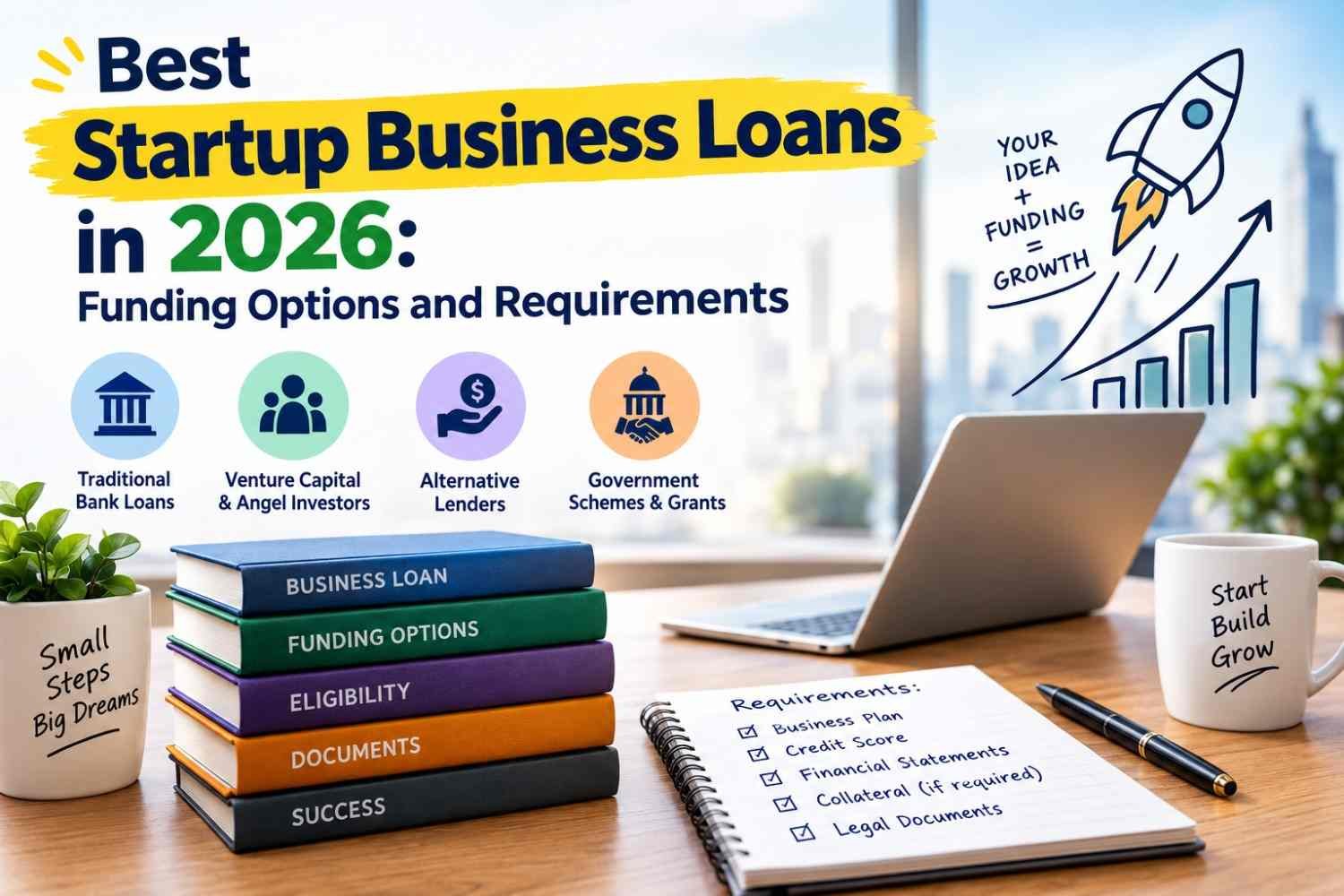
Starting a business requires more than a great idea. Entrepreneurs often need capital to purchase equipment, build inventory, hire employees, develop products, pay operating expenses, and attract their first customers. However, getting approved for financing can be challenging when a business has limited operating history, little revenue, or no established business credit.
The good news is that several startup financing options are available in the United States, including SBA microloans, SBA 7(a) loans, equipment financing, business lines of credit, and nonprofit lending programs. The right option depends on your funding requirements, credit profile, business plan, and ability to repay the borrowed amount.
In this guide, we explain the best startup business loans in 2026, compare popular funding options, outline common eligibility requirements, and explain how new entrepreneurs can improve their chances of securing financing.
Whether you are launching an online business, opening a retail store, starting a consulting firm, or building a service-based company, this guide will help you understand the available funding paths.
What Are Startup Business Loans?
Startup business loans are financing products designed to help entrepreneurs establish or grow a new business. Depending on the lender and loan program, funds may be used for equipment, inventory, working capital, business supplies, marketing expenses, or other eligible business costs.
Unlike established companies, startups may not have several years of financial statements or a consistent revenue history. As a result, lenders often evaluate additional factors, including the owner’s personal credit history, available collateral, industry experience, financial projections, and personal investment in the business.
Some startup loans are provided by banks and private lenders, while others are supported by government programs or nonprofit organizations.
Common startup financing options include:
- SBA microloans for smaller funding requirements.
- SBA 7(a) loans for eligible business purposes.
- Equipment financing for machinery, vehicles, and business equipment.
- Business lines of credit for short-term funding needs.
- Community Development Financial Institution (CDFI) loans.
- Personal loans or personal savings used to fund a business, where appropriate.
- Business credit cards for eligible purchases.
Not every option is available to a business that has not started generating revenue. Understanding each product’s requirements can help entrepreneurs avoid unsuitable applications and unnecessary borrowing costs.
Best Startup Business Loans in 2026
The following options are worth investigating when comparing startup business financing in the United States. They serve different purposes, so the best choice depends on how much capital you need and whether your business has begun operating.
1. SBA Microloans: Best for Smaller Startup Funding Needs
The U.S. Small Business Administration (SBA) Microloan Program provides loans of up to $50,000 through participating nonprofit and community-based intermediary lenders. The average microloan is approximately $13,000.
These loans can be used for eligible startup and expansion expenses, including working capital, inventory, supplies, furniture, fixtures, machinery, and equipment.
Key features:
- Maximum loan amount: $50,000.
- Maximum repayment term: Seven years.
- Interest rates: Determined by the intermediary lender.
- Application channel: Participating SBA microloan intermediaries.
- Potential uses: Inventory, supplies, equipment, and working capital.
Microloans can be worth exploring for entrepreneurs who need modest funding and have difficulty qualifying for traditional commercial financing. However, approval is not automatic, and lenders may review the owner’s credit history, business plan, repayment capacity, and collateral or personal guarantee requirements.
Microloan proceeds cannot be used to purchase real estate or repay existing debt.
Best for: Small retailers, home-based businesses, service providers, and early-stage entrepreneurs with relatively modest capital requirements.
2. SBA 7(a) Loans: Best for Broader Business Financing
The SBA 7(a) Loan Program is one of the agency’s primary small-business financing programs. Participating lenders provide the loans, while the SBA guarantees a portion of eligible loans under program rules.
The maximum loan amount is $5 million. Depending on the loan structure and approved purpose, funds may support working capital, equipment purchases, eligible real estate expenses, business acquisitions, and other permitted uses.
Key features:
- Maximum loan amount: $5 million.
- Available through participating lenders.
- Interest rates and fees are subject to applicable SBA limits.
- Approval depends on the lender’s underwriting and SBA eligibility rules.
- Applicants must demonstrate an ability to repay the loan.
A startup may qualify in some circumstances, but an SBA 7(a) loan is not guaranteed simply because a business has a strong idea. Lenders may examine the business plan, projected cash flow, owner equity contribution, credit history, collateral, and other financial information.
New entrepreneurs should contact participating lenders to confirm whether their business stage and financing purpose meet the lender’s requirements.
Best for: Entrepreneurs who need a larger amount of funding and can demonstrate a credible business plan and repayment strategy.
3. CDFI Loans: Best for Community-Based Financing
Community Development Financial Institutions, or CDFIs, provide financing and other support to eligible communities and businesses. Some CDFIs work with entrepreneurs who have limited access to conventional bank financing.
Depending on the organization, startup applicants may find small business loans, business coaching, technical assistance, or financial education.
Loan amounts, interest rates, eligibility rules, and application procedures vary by lender. Some organizations specialize in particular locations, industries, or underserved business communities.
Before applying, review the lender’s official website and confirm that it accepts businesses at your stage of development.
Best for: Entrepreneurs seeking community-based lending and additional guidance while establishing a business.
4. Equipment Financing: Best for Purchasing Business Equipment
Equipment financing allows a business to obtain machinery, commercial equipment, technology, or other qualifying assets through a financing arrangement.
The equipment may serve as collateral, depending on the agreement. This can make equipment financing different from an unsecured business loan, although approval requirements vary.
For example, a construction company may need machinery, a restaurant may need commercial kitchen equipment, and a manufacturing startup may need production tools.
Before choosing a financing offer, compare the annual percentage rate where available, down payment, repayment term, origination fees, collateral requirements, and total amount payable.
Startups should also check whether the lender requires operating history, existing revenue, or a personal guarantee.
Best for: New businesses that need specific income-generating equipment rather than unrestricted cash.
5. Business Lines of Credit: Best for Flexible Working Capital
A business line of credit provides access to a predetermined borrowing limit. Instead of receiving the entire amount as a single lump sum, a business can generally draw funds when needed, subject to the agreement.
This flexibility can help cover eligible short-term expenses such as inventory purchases, supplier payments, or temporary cash-flow gaps.
However, many providers require business bank activity, revenue, or a minimum period in operation. Consequently, a line of credit may be more suitable for a startup that has begun trading than for a business that has not launched.
Compare variable interest rates, draw fees, maintenance fees, repayment schedules, and renewal conditions before accepting an offer.
Best for: Businesses with recurring working-capital needs and sufficient cash flow to repay borrowed funds.
Startup Business Loan Comparison
| Funding option | Typical purpose | Main consideration |
|---|---|---|
| SBA microloan | Smaller startup expenses | Maximum loan of $50,000 |
| SBA 7(a) loan | Broader business financing | Detailed underwriting and repayment assessment |
| CDFI loan | Community-based business funding | Eligibility varies by organization |
| Equipment financing | Machinery and equipment | Asset and financing terms |
| Business line of credit | Flexible working capital | Revenue and operating history may be required |
Loan availability, pricing, and eligibility depend on the specific lender and applicant. Verify current terms directly before applying.
Startup Business Loan Requirements in 2026
Startup business loan requirements differ across lenders and financing programs. Some lenders focus heavily on personal credit and business revenue, while others may consider a detailed business plan, owner investment, collateral, or the intended use of funds.
Understanding these requirements before applying can help you prepare a stronger application.
1. Personal Credit History
When a business has little financial history, lenders may rely more heavily on the owner’s personal credit profile.
A stronger credit history can improve the likelihood of qualifying for certain products, although it does not guarantee approval or a lower interest rate.
There is no single credit score requirement for every startup loan. Check each lender’s minimum criteria and review your credit reports before submitting an application.
2. Business Plan
A detailed business plan helps explain how your company will operate and generate enough income to repay financing.
Your plan should include:
- A description of your product or service.
- Your target customers and market research.
- Competitor analysis.
- Startup expenses and funding requirements.
- Pricing and expected revenue.
- Operating expenses and cash-flow projections.
- Your marketing and customer acquisition strategy.
- A realistic repayment plan.
Avoid unsupported revenue projections. Lenders may question forecasts that do not reflect realistic costs, market demand, or the time required to acquire customers.
3. Financial Statements and Cash-Flow Projections
Established businesses may need to provide bank statements, profit-and-loss statements, balance sheets, tax returns, and other financial records.
A pre-revenue startup may not have historical financial statements. In that case, lenders may request detailed projections, opening balance sheets, personal financial information, or evidence of available startup capital.
The exact documents depend on the financing product.
4. Business Registration and Legal Documents
Depending on the lender and business structure, applicants may need:
- Business registration documents.
- Employer Identification Number (EIN), where applicable.
- Business bank account information.
- Ownership and identification documents.
- Licenses or permits required for the business.
- Tax returns or financial statements, if available.
For SBA-backed financing, the business must meet the applicable program requirements, including location, size, business activity, and other eligibility conditions.
5. Collateral and Personal Guarantees
Some business loans require collateral, a personal guarantee, or both. Other products may have different security arrangements.
Collateral may include eligible equipment, business assets, or other property accepted by the lender. A personal guarantee can make an owner personally responsible for repayment under the guarantee’s terms.
Review all guarantee and collateral documents carefully before signing. Understand the financial consequences if the business cannot repay the loan.
Can You Get a Startup Business Loan With No Revenue?
Yes, some funding options may be available to entrepreneurs whose businesses have not generated revenue. However, qualifying for a loan with no revenue can be more difficult because the lender has less evidence of the business’s ability to repay.
The most realistic options depend on the startup’s stage, the owner’s financial profile, and the amount required.
Potential Funding Options for Pre-Revenue Startups
SBA microloans: Consider this route if you need a relatively small amount and can meet the intermediary lender’s eligibility and underwriting criteria.
CDFI and nonprofit lenders: Some organizations provide financing or guidance to early-stage entrepreneurs who may have difficulty accessing conventional credit.
Equipment financing: This may be worth exploring when the primary expense is a specific asset, although lenders may still require revenue, credit strength, or a personal guarantee.
Personal savings or owner investment: Using your own funds avoids loan interest, but it puts personal capital at risk and should be planned carefully.
Business grants and incubator programs: Depending on your industry, location, and eligibility, certain programs may offer non-dilutive funding or startup support. Grants are competitive and should not be treated as guaranteed funding.
A business with no revenue should be cautious about lenders advertising guaranteed approval, instant funding without meaningful checks, or unusually easy access to large loans. Verify the lender, read the contract, and calculate the total borrowing cost before proceeding.
How to Apply for a Startup Business Loan
A structured application process can help you identify suitable lenders and reduce avoidable delays.
Step 1: Calculate Your Startup Funding Requirements
Estimate how much money you actually need to launch and operate your business.
Separate one-time expenses, such as equipment and registration, from recurring costs, such as rent, payroll, software, inventory, and marketing.
Include a realistic contingency reserve, but avoid borrowing more than your business can reasonably repay.
Step 2: Choose the Right Financing Type
Match the financing product to the intended use.
For example, consider an SBA microloan for a smaller eligible funding requirement, equipment financing for machinery, or a business line of credit for qualifying working-capital needs.
Do not choose a loan based only on the advertised maximum amount.
Step 3: Review Your Credit and Financial Documents
Check your credit reports and gather your business plan, financial projections, bank statements, registration documents, and any other requested paperwork.
If you are launching a business with no sales, prepare to explain how the business will generate revenue and when you expect to reach a sustainable cash-flow position.
Step 4: Compare Multiple Lenders
Request offers from suitable lenders and compare:
- Annual percentage rate (APR), where available.
- Interest rate and whether it is fixed or variable.
- Origination and closing fees.
- Repayment term and payment frequency.
- Collateral and personal guarantee requirements.
- Prepayment terms and late-payment penalties.
- Total repayment amount.
Compare the complete cost of borrowing rather than focusing only on the monthly payment.
Step 5: Submit Your Application
Complete the application accurately and provide all required documentation. If a lender offers prequalification, check whether it uses a soft credit inquiry or a hard credit inquiry.
Ask the lender about the expected decision timeline and any additional conditions that must be satisfied before funds are disbursed.
Step 6: Review the Final Loan Agreement
Before accepting an offer, confirm the approved amount, interest rate, fees, repayment schedule, default provisions, and guarantee obligations.
Make sure the expected business cash flow can support the payments without creating an unsustainable financial burden.
How to Improve Your Chances of Getting Approved
Although no strategy can guarantee loan approval, several practical steps can help make an application more credible.
Build a detailed business plan. Show that you understand the market, operating expenses, customer demand, and revenue model.
Maintain good personal credit. Review your credit reports for errors and manage existing obligations responsibly.
Contribute appropriate owner capital. If financially feasible, a personal investment may demonstrate commitment, although requirements differ by lender.
Keep business and personal finances organized. Use clear records and a dedicated business bank account when appropriate.
Start with a realistic funding amount. Request financing that matches documented business needs and a plausible repayment plan.
Explore specialist lenders. A nonprofit lender, CDFI, or SBA intermediary may offer a more suitable route than a lender focused on established businesses.
Avoid excessive applications. Research eligibility before applying, particularly where hard credit inquiries may be involved.
Common Mistakes to Avoid When Choosing Startup Financing
Startup founders can face unnecessary costs when they choose financing without comparing the full terms.
Focusing Only on the Interest Rate
A loan with a lower advertised interest rate may still have substantial fees, collateral requirements, or unfavorable repayment conditions. Compare APR where available and the total amount payable.
Borrowing More Than the Business Needs
Excess borrowing can increase monthly payments and reduce the cash available for operations. Prepare a realistic startup budget before selecting a loan amount.
Ignoring Repayment Frequency
Some financing products require daily or weekly payments rather than monthly installments. Confirm the payment schedule and ensure it matches your expected cash flow.
Assuming Every SBA Loan Is Designed for Startups
SBA-backed loans have specific eligibility requirements. A program that works for an established small business may not be appropriate for a pre-revenue company.
Overlooking Personal Guarantees
A personal guarantee can create financial obligations beyond the business itself. Understand the terms before signing.
Trusting Guaranteed-Approval Claims
Legitimate financing decisions generally involve eligibility checks and an assessment of risk. Be cautious about upfront fees, unclear lender identities, pressure tactics, and promises that appear too good to be true.
Frequently Asked Questions About Startup Business Loans
What is the best startup business loan in 2026?
There is no single best option for every entrepreneur. SBA microloans may suit smaller funding requirements, while SBA 7(a) loans, equipment financing, CDFI loans, and business lines of credit may suit different circumstances. Compare eligibility, borrowing costs, and repayment terms.
Can I get a business loan to start a business with no money?
Getting financing with no personal investment and no business revenue can be difficult. Some nonprofit lenders or funding programs may consider eligible applicants, but approval depends on their requirements. Grants, incubators, partnerships, and carefully planned personal funding may also be worth investigating.
What credit score is needed for a startup business loan?
There is no universal minimum credit score. Requirements vary by lender and loan type, and some programs assess more than a credit score. Check the provider’s eligibility criteria before applying.
How much can a startup borrow?
The amount depends on the financing product, business needs, eligibility, and repayment capacity. For example, SBA microloans have a maximum amount of $50,000, while SBA 7(a) loans can reach $5 million for eligible borrowers.
Are SBA loans available to new businesses?
Some startups may qualify for SBA-backed financing, depending on the program, lender, and applicant’s circumstances. The business must meet the relevant eligibility rules and demonstrate a credible ability to repay.
What documents are required for a startup loan?
Common documents include a business plan, financial projections, registration documents, identification, bank statements, tax returns where available, and personal financial information. The lender may request additional documentation.
Is a startup business loan better than a business credit card?
It depends on the funding need. A term loan may suit a planned, larger expense with a defined repayment schedule. A business credit card may offer flexibility for eligible purchases but can carry high interest if the balance is not paid in full. Compare fees, APR, repayment requirements, and your ability to repay.
Can I use a startup business loan for marketing?
Some financing products allow eligible marketing and operating expenses, but permitted uses vary. Confirm the loan agreement and program rules before using the funds.
Final Thoughts
Finding the best startup business loans in 2026 starts with understanding your funding needs, business stage, credit profile, and repayment capacity. Entrepreneurs who need smaller amounts may want to investigate SBA microloans and community-based lenders, while those with specific equipment needs or established revenue may have additional financing options.
Before choosing a lender, compare the full cost of borrowing, check eligibility requirements, prepare accurate financial projections, and review all contractual obligations. Responsible financing can help a new business establish operations without taking on more debt than it can manage.